2 syllables: Im, pact. Stress on pact.
im-PAKT
/ˌɪˈmpækt/
Impact is pronounced im-PAKT (/ˌɪˈmpækt/). It has two syllables (Im-pact), with the stress on "pact". Impact (noun) refers to the strong effect or influence something has, or the force with which one thing collides with another. It can denote a notable outcome, consequence, or a physical collision. In both abstract and concrete senses, impact conveys significance, magnitude, and often a lasting change or result.
nounImpact (noun) refers to the strong effect or influence something has, or the force with which one thing collides with another. It can denote a notable outcome, consequence, or a physical collision. In both abstract and concrete senses, impact conveys significance, magnitude, and often a lasting change or result.
How to Pronounce Impact
"The impact of climate policy on emissions was immediate and measurable."
"Her words had a profound impact on the audience, shifting their perspective."
"The car crash left a visible impact on the front bumper and a lasting emotional impact on the driver."
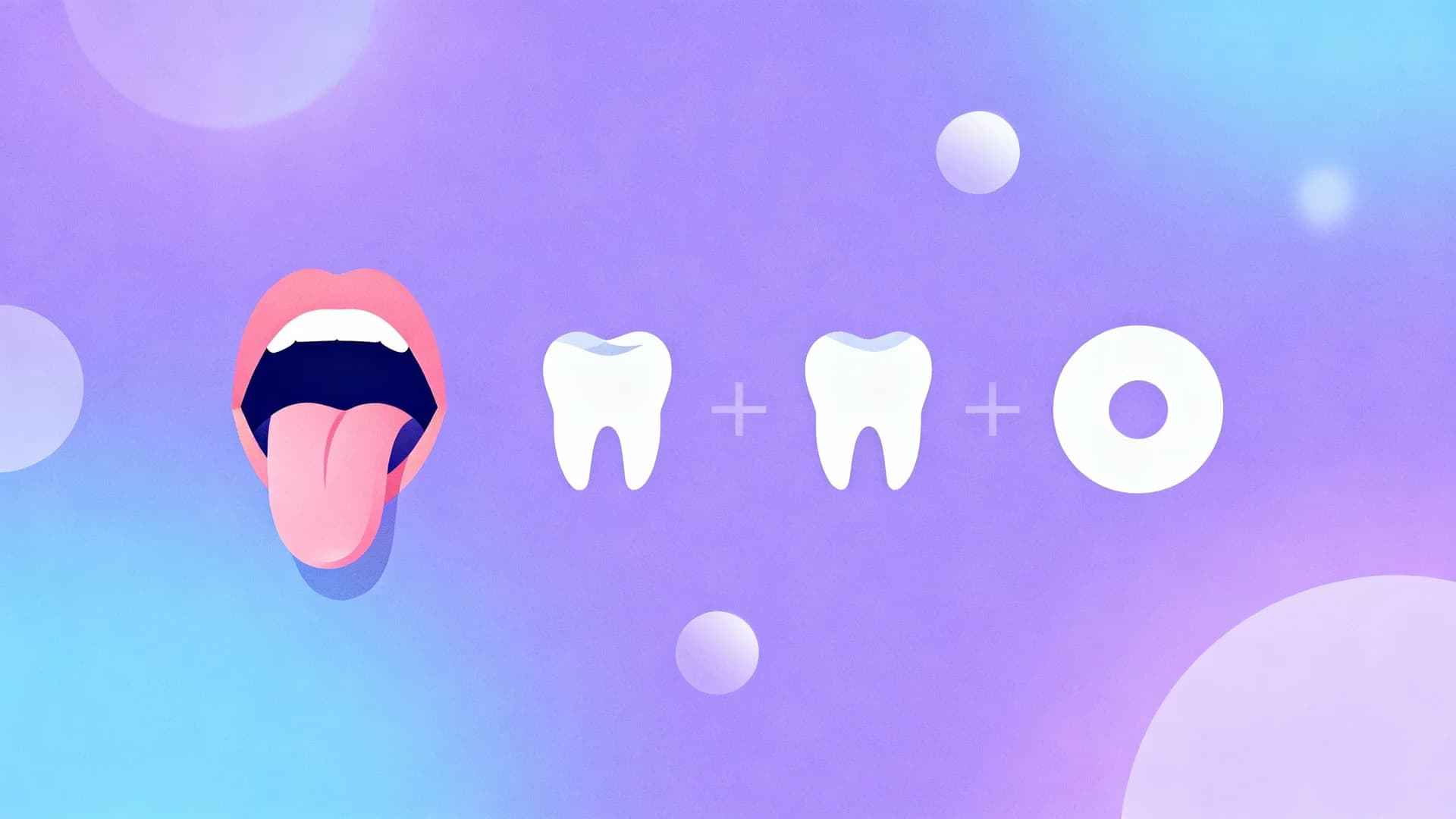
Pronounce as /ˈɪm.pækt/. Primary stress on the first syllable: IM-pakt. Start with a short, lax /ɪ/ as in sit, then a clear /m/ immediately followed by /p/ in a burst of aspiration. The second syllable uses /æ/ as in cat, then ends with /kt/ where the /k/ is released into a rapid /t/. Keep the sequence smooth: [ɪm] + [pækt], with strong onset and crisp consonant cluster at the end. Audio reference: comparison to a standard dictionary reading often confirms the crisp /pækt/ cluster.
Common errors include reducing the first syllable to a schwa or a lax /ɪ/ like ‘uhm-PAKT’ and inserting a vowel before the /kt/ cluster (e.g., ‘im-PA-ket’). Another frequent mistake is misplacing the stress, saying im-PACT instead of IM-pakt. To correct: keep stress on the first syllable, ensure the /p/ is released into the /æ/ vowel in the second syllable, and end with a clear /kt/ without a vowel between /k/ and /t/. Practice should emphasize the immediate /m/ to /p/ transition and a firm /k/ before the final /t/.
In US/UK/AU, /ˈɪm.pækt/ remains the core; differences are subtle. US often has rhoticity in related words, but impact itself is non-rhotic in stress pattern—rhoticity is less of a factor here since /ɹ/ is not present. The vowel /ɪ/ in the first syllable remains near-silent as a short /ɪ/ for all three. Vowel duration and vowel quality can vary slightly: UK may have a marginally shorter /ɪ/ and a crisper /pækt/; US tends to a slightly more open /æ/. In Australian English, you may hear a slightly more centralized /æ/ and faster transition between /m/ and /p/ with a tighter /t/ release.
The challenge lies in the consonant cluster at the end: the /pt/ sequence without an intervening vowel can be tricky; many learners add a vowel (pling: /ɪmˈpækt/ with an extra sonorant) or fail to release /p/ fully into /æ/ and then to /kt/. Additionally, maintaining primary stress on the first syllable while ensuring the /m/ and /p/ are cleanly articulated requires precise tongue and lip coordination. Practice the /m/ closure and quick transition into /p/ and /æ/ while keeping the /k/–/t/ release crisp.
A practical nuance is whether you hear the /m/ suffix linking with the subsequent /p/ (as in a rapid consonant cluster) or a small vocalic foothold between /m/ and /p/. In careful speech, there is typically no vowel between /m/ and /p/, yielding IM-pækt. In fast speech or certain dialects, you might perceive a lighter, almost syllabic /m/ leading into /pækt/. Understanding this helps you maintain the correct sequence without inserting extraneous vowels.
🗣️ Voice search tip: These questions are optimized for voice search. Try asking your voice assistant any of these questions about "Impact"!
Impact derives from the Latin word impactus, past participle of impingere meaning to push against. The root in- and pendere (to hang or weigh) conflate into ‘to push upon’ and later to strike. In English, impact appeared in the 16th century primarily in physical collision contexts. By the 18th–19th centuries, the metaphorical sense—an influence or consequence—gained prominence, expanding to abstract domains like policy and culture. The word traveled from Latin through Old French into Middle English, consolidating as a versatile term used in physics, rhetoric, sociology, and everyday language. Its evolution reflects a shift from tangible collision to the broader notion of forceful effect. Contemporary usage distinguishes physical impact from social or intellectual impact, with hybrids like “the impact of” signaling causal significance. First known use in print aligns with scientific and mechanical discourse, later permeating journalism and academia as a general descriptor of importance and effect.
💡 Etymology tip: Understanding word origins can help you remember pronunciation patterns and recognize related words in the same language family.
Help others use "Impact" correctly by contributing grammar tips, common mistakes, and context guidance.
💡 These words have similar meanings to "Impact" and can often be used interchangeably.
🔄 These words have opposite meanings to "Impact" and show contrast in usage.
📚 Vocabulary tip: Learning synonyms and antonyms helps you understand nuanced differences in meaning and improves your word choice in speaking and writing.
Words that rhyme with "Impact"
-act sounds
Practice with these rhyming pairs to improve your pronunciation consistency:
🎵 Rhyme tip: Practicing with rhyming words helps you master similar sound patterns and improves your overall pronunciation accuracy.
See how this word is used in our articles