One syllable: deep.
deep
/dip/
deep is pronounced deep (/dip/). It has one syllable (deep), with the stress on "deep". Deep is a monosyllabic lexical item referring to considerable vertical extent or intensity, often signaling profoundness or thoroughness. In everyday use it can describe physical depth, emotional intensity, or abstract degrees (e.g., deep thought). The term carries a neutral to slightly formal tone depending on context, and frequently functions as an adjective or adverb in constructions like “deep enough” or “dig deep.”.
Deep is a monosyllabic lexical item referring to considerable vertical extent or intensity, often signaling profoundness or thoroughness. In everyday use it can describe physical depth, emotional intensity, or abstract degrees (e.g., deep thought). The term carries a neutral to slightly formal tone depending on context, and frequently functions as an adjective or adverb in constructions like “deep enough” or “dig deep.”
- Mistake: Releasing the /p/ too softly or letting the vowel bleed into post-consonantal space, causing a muted or indistinct /p/. Correct by practicing a crisp stop after the long /iː/ with a small, sharp puff of air and an audible /p/ closure. - Mistake: Substituting a short /i/ (/dɪp/) or a diphthong-like /iə/ in rapid speech; fix by enforcing the pure /iː/ and a hard /p/ release, using minimal pair practice like /diːp/ vs /dɪp/. - Mistake: Vowel reduction in fast connected speech, turning /diːp/ into /diˈp/ or /diːpə/. Practice with deliberate enunciation at phrase boundaries, and rehearse with phrase-final pauses to reinforce the full vowel.
"The lake is very deep, and you should swim with a buddy."
"She paused for a deep breath before answering."
"He has a deep understanding of quantum mechanics."
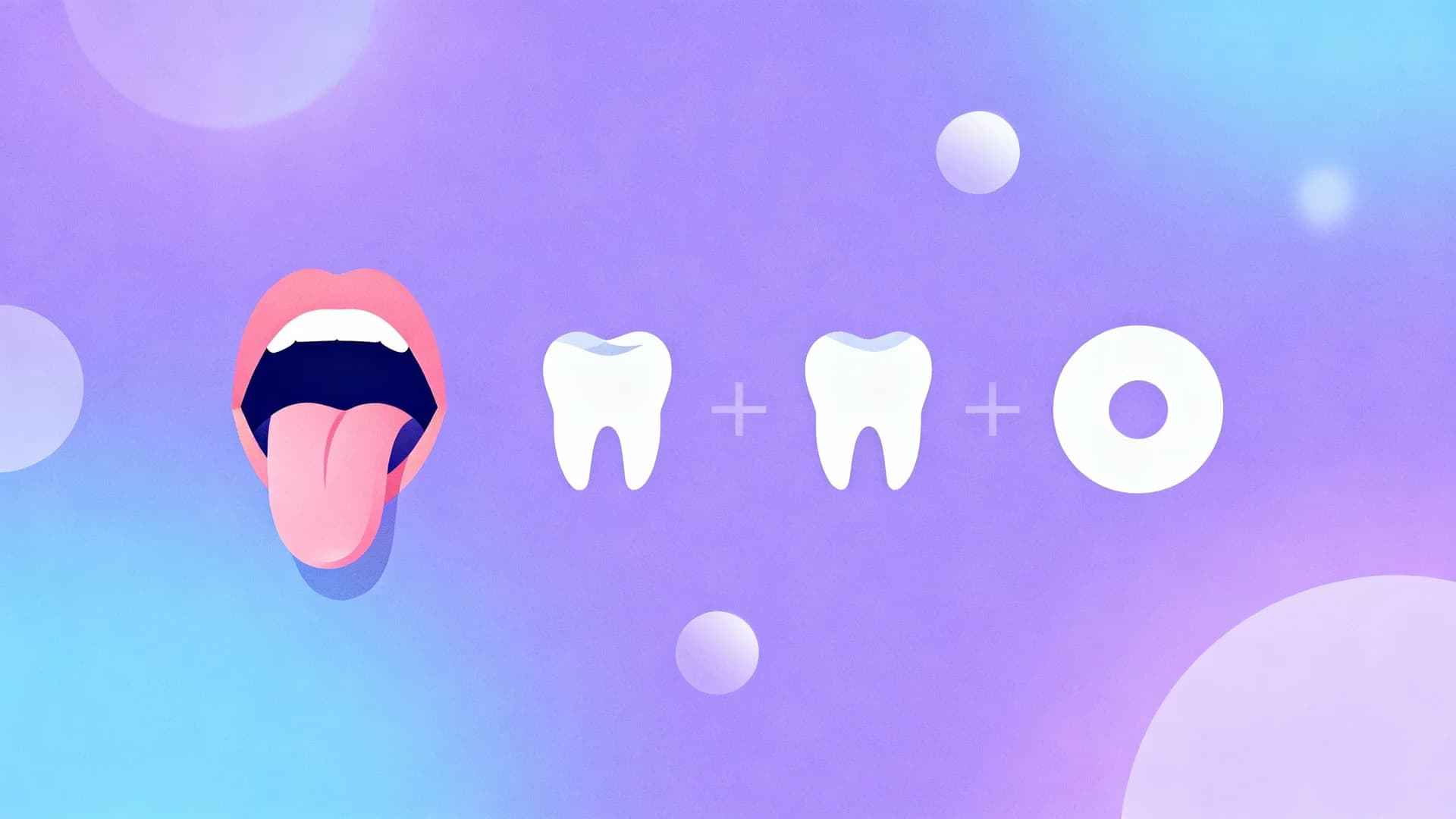
You pronounce it as /diːp/. The vowel is a long “ee” sound held for about a beat, followed by a voiceless bilabial stop /p/. Start with a relaxed jaw and lips spread slightly; the tongue sits high and forward for /iː/. Ensure there’s no trailing consonant after the /p/ in careful speech. In connected speech, you may hear a very brief glottal release before /p/ in rapid phrases.
Two common errors are pronouncing it as /dɪp/ (short /i/) or lengthening the final stop into /dipa/ with an extra vowel. Correct by keeping the tongue high for /iː/ and releasing cleanly with /p/. Another mistake is adding a following schwa, as in /diːpə/. Practice ending abruptly on /p/ without extra vowel and finishing with a crisp lip stop.
In General American and most UK accents, /diːp/ is a clean long /iː/ before /p/. Australian English often has a slightly clipped /iː/ and may exhibit a subtle vowel height difference, but the difference is minimal. In rapid speech, Americans may reduce preconsonantal vowel length a bit, while UK speakers keep it closer to a full /iː/. The rhoticity doesn’t affect this word since /iː/ is unaffected by r-coloring.
The challenge lies in maintaining a pure high-front vowel /iː/ without letting it dip toward /ɪ/ and in executing the clear /p/ release without vowel intrusion. The teeth, lip rounding, and jaw position must coordinate to sustain the long vowel sound, especially in rapid speech where the /iː/ can transiently shorten. Maintaining crisper articulation of the final /p/ helps avoid a muffed or nasalized closure.
Think ‘ee’ as in see, but allow a tiny, almost imperceptible breath closure at the moment of lip contact to ensure a clean /p/ release. Visualize the mouth as forming a small triangle with the lips slightly spread, then snap shut on the /p/ release. Keep the tongue high and forward without tensing the jaw, and avoid adding a trailing vowel after the /p/.
🗣️ Voice search tip: These questions are optimized for voice search. Try asking your voice assistant any of these questions about "deep"!
- US: Clear, long /iː/ with steady mouth height; avoid vowel reduction in careful speech. Pronounce /iː/ with a tense, high front tongue and spread lips; keep /p/ released crisply. - UK: Similar to US, but with slightly more precise vowel length control and less rhotic influence on vowels preceding /r/, though not relevant here. Maintain clean lip rounding and jaw tension consistent with /iː/. - AU: Often maintains a compact, quick /iː/ with slightly more relaxed jaw; you may hear shorter vowel duration in casual speech, but keep the /p/ release audible. IPA references: /diːp/ across varieties; monitor subtle vowel height and duration differences when speaking fast.
Deep traces back to Old English deop, from Proto-Germanic debaz, with cognates in Old Saxon dep, Old High German depth. The root conveys distance from top to bottom and the sense of being far into or penetrating. In Middle English, deep expanded beyond physical depth to describe abstract intensity and thoroughness. By the 16th–17th centuries, metaphorical uses proliferated: deep thought, deep sleep, deep emotion. The word’s semantic reach widened during the scientific and philosophical revolutions, paralleling English’s shift to describe non-physical depths: depth of meaning, depth of experience. Phonologically, the long vowel quality persisted into modern English, with the vowel system stabilizing into /iː/ in many dialects, though some regional pronunciations may reduce it toward /i/. The negative form deepened as a comparative depth metaphor, reinforcing its role as a measure and a qualitative descriptor across disciplines—from literature to geology to psychology.
💡 Etymology tip: Understanding word origins can help you remember pronunciation patterns and recognize related words in the same language family.
Help others use "deep" correctly by contributing grammar tips, common mistakes, and context guidance.
💡 These words have similar meanings to "deep" and can often be used interchangeably.
🔄 These words have opposite meanings to "deep" and show contrast in usage.
📚 Vocabulary tip: Learning synonyms and antonyms helps you understand nuanced differences in meaning and improves your word choice in speaking and writing.
Words that rhyme with "deep"
-eap sounds
-eep sounds
Practice with these rhyming pairs to improve your pronunciation consistency:
🎵 Rhyme tip: Practicing with rhyming words helps you master similar sound patterns and improves your overall pronunciation accuracy.
See how this word is used in our articles