4 syllables: a, mer, i, can. Stress on mer.
uh-MER-uh-kuhn
/əˈmɛɹəkən/
american is pronounced uh-MER-uh-kuhn (/əˈmɛɹəkən/). It has four syllables (a-mer-i-can), with the stress on "mer". American is an adjective and noun referring to people, culture, or things related to the United States. In broader use, it denotes nationality or origin. The term commonly appears in discussions of identity, politics, geography, and media, and is often paired with regional or cultural qualifiers (e.g., American English, American cuisine).
American is an adjective and noun referring to people, culture, or things related to the United States. In broader use, it denotes nationality or origin. The term commonly appears in discussions of identity, politics, geography, and media, and is often paired with regional or cultural qualifiers (e.g., American English, American cuisine).
- You might over-articulate the second syllable, turning /ə/ into a full /əˈ/; instead keep it a quick schwa: /æ.məˈɹeɪ.kən/. - Forget the strong third-syllable stress; practice with a clear /ˈɹeɪ/ rather than a reduced vowel. - Ending with an elongated or clipped /ən/ is common; aim for a relaxed, quick /ən/ without adding extra vowel length. - In rapid speech, people sometimes merge /æm/ and /ə/; practice spacing: /æ.mə/ then /ˈɹeɪ.kən/ for clarity.
"She adopted an American accent after living in New York for two years."
"The American flag fluttered outside the embassy."
"We studied American history in high school."
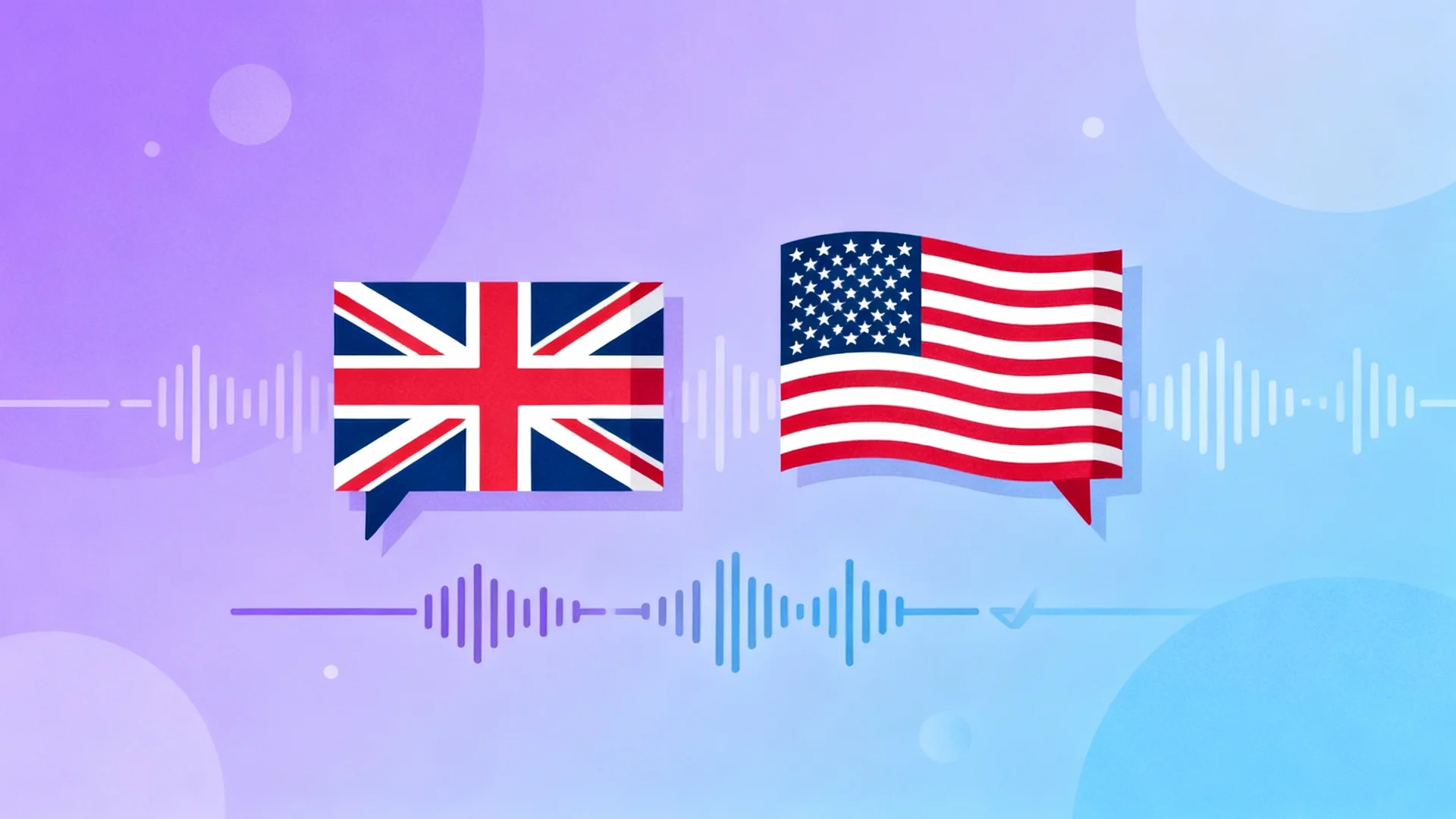
Pronounce as /ˌæ.məˈɹeɪ.kən/ in US English, with three syllables. Stress falls on the third syllable: amə-REI-kən. The first syllable is a quick 'a' as in 'cat,' the second is a schwa, and the third features an 'ray' vowel followed by a soft 'cən' ending. In IPA: US /ˌæ.məˈɹeɪ.kən/, UK /ˌæm.əˈɹɪ.kən/; AU resembles US but with slightly tighter vowel quality. Audio reference: try listening to native speakers on Pronounce or Forvo variations of American/US pronunciations.
Common errors: shifting primary stress to the first or second syllable (æ-mə-REI-kən) or softening the second syllable unintentionally. Another pitfall is saying the second syllable as a clear 'uh' with a strong 'r' in non-rhotic contexts; instead it’s a schwa before a pronounced 'rei' sequence. Correct by maintaining /ˌæ.məˈɹeɪ.kən/ with a light, quick schwa and a distinct /ɹeɪ/. Finally, ensure the ending /kən/ doesn’t become /kənn/ or /kənθ/ in rapid speech.
US: stressed third syllable with /ɹeɪ/ as a clear diphthong; rhotic /ɹ/. UK: non-rhotic or weak-rhotic tendencies; may sound /ˌæm.əˈɹɪ.kən/ with a shorter /ɪ/ in the third syllable and less rhoticity in rapid speech. AU: similar to US but with slightly different vowel lengths and a broader /ɐ/ in some speakers; final /ən/ may be more syllabic. Overall, vowel quality and rhoticity are the main differences, with the US being strongly rhotic and UK/AU showing reduced rhoticity in casual speech.
The difficulty lies in the sequence of a stressed diphthong /eɪ/ in the third syllable and the quick, reduced middle syllable /ə/ that blends into /ˈɹeɪ/; mastering the schwa in the second syllable and a crisp /ˈɹeɪ/ can be tricky. Also, maintaining clear final /ən/ without adding extra syllables or syllabic consonants requires precise following-through of the vocal tract. Focus on timing: weak middle, strong third-stress, crisp end.
A distinctive feature is the three-syllable rhythm with primary stress on the third syllable and the presence of the /ɹeɪ/ diphthong. Emphasizing /ˌæ.məˈɹeɪ.kən/ and distinguishing it from similar-sounding words (e.g., 'American' vs. 'Amerīcan' in some dialects) can yield specific search value. Also, noting the ch- sequence in rapid speech helps differentiate it from 'Ameri-can' variants. Use targeted phonetic cues and IPA tags to optimize snippets and pronunciation guides.
🗣️ Voice search tip: These questions are optimized for voice search. Try asking your voice assistant any of these questions about "american"!
- US: Rhotic /ɹ/ is pronounced; keep the tongue tip raised towards the alveolar ridge without curling. The /eɪ/ diphthong is prominent in /ˈɹeɪ/; start mid to low, glide up to a higher vowel before the /kən/. - UK: Non-rhotic tendency; ensure the /ɹ/ is weaker or dropped in some contexts; the /ə/ in the second syllable may be less prominent. The /eɪ/ may be slightly shorter; keep it crisp but not overly long. - AU: Similar to US with a slightly broader vowel quality; /ɹ/ remains approximate in many dialects; /æ/ can be a bit more centralized. Reference IPA: US /ˌæ.məˈɹeɪ.kən/, UK /ˌæm.əˈɪ.kən/ (or /ˌæm.əˈɹɪ.kən/), AU /ˌæ.məˈɹiən/ depending on speaker. Focus on rhotics and diphthongs for all: keep /ɹ/ clear (US), variegated in UK/AU, but avoid full rhotic release in non-rhotic environments.
The word American derives from the given name Amerigo, as in Amerigo Vespucci, whose explorations led to the understanding that the territories encountered by Europeans in the New World were not part of Asia but a separate continent. The Latin form Americus, meaning ‘of America,’ was used in the early modern period to refer to the New World’s inhabitants and features. By the late 18th century, the term began to denote the people, culture, and geography of the United States, especially after independence. The adoption of American to describe the United States’ people became common in political and literary language, reinforcing a sense of national identity separate from European origins. The term extended to adjectives (American democracy, American films) and later to demonyms for citizens. Over time, American also took on sub-national uses (e.g., American Indian, American literature) and, in modern usage, encompasses cultural and stylistic identifiers beyond strict nationality. First known uses can be traced to early modern Latin and English texts around the 16th–18th centuries, with widespread American self-descriptor usage solidifying post-1776.
💡 Etymology tip: Understanding word origins can help you remember pronunciation patterns and recognize related words in the same language family.
Help others use "american" correctly by contributing grammar tips, common mistakes, and context guidance.
💡 These words have similar meanings to "american" and can often be used interchangeably.
🔄 These words have opposite meanings to "american" and show contrast in usage.
📚 Vocabulary tip: Learning synonyms and antonyms helps you understand nuanced differences in meaning and improves your word choice in speaking and writing.
Words that rhyme with "american"
-ian sounds
Practice with these rhyming pairs to improve your pronunciation consistency:
🎵 Rhyme tip: Practicing with rhyming words helps you master similar sound patterns and improves your overall pronunciation accuracy.
See how this word is used in our articles